
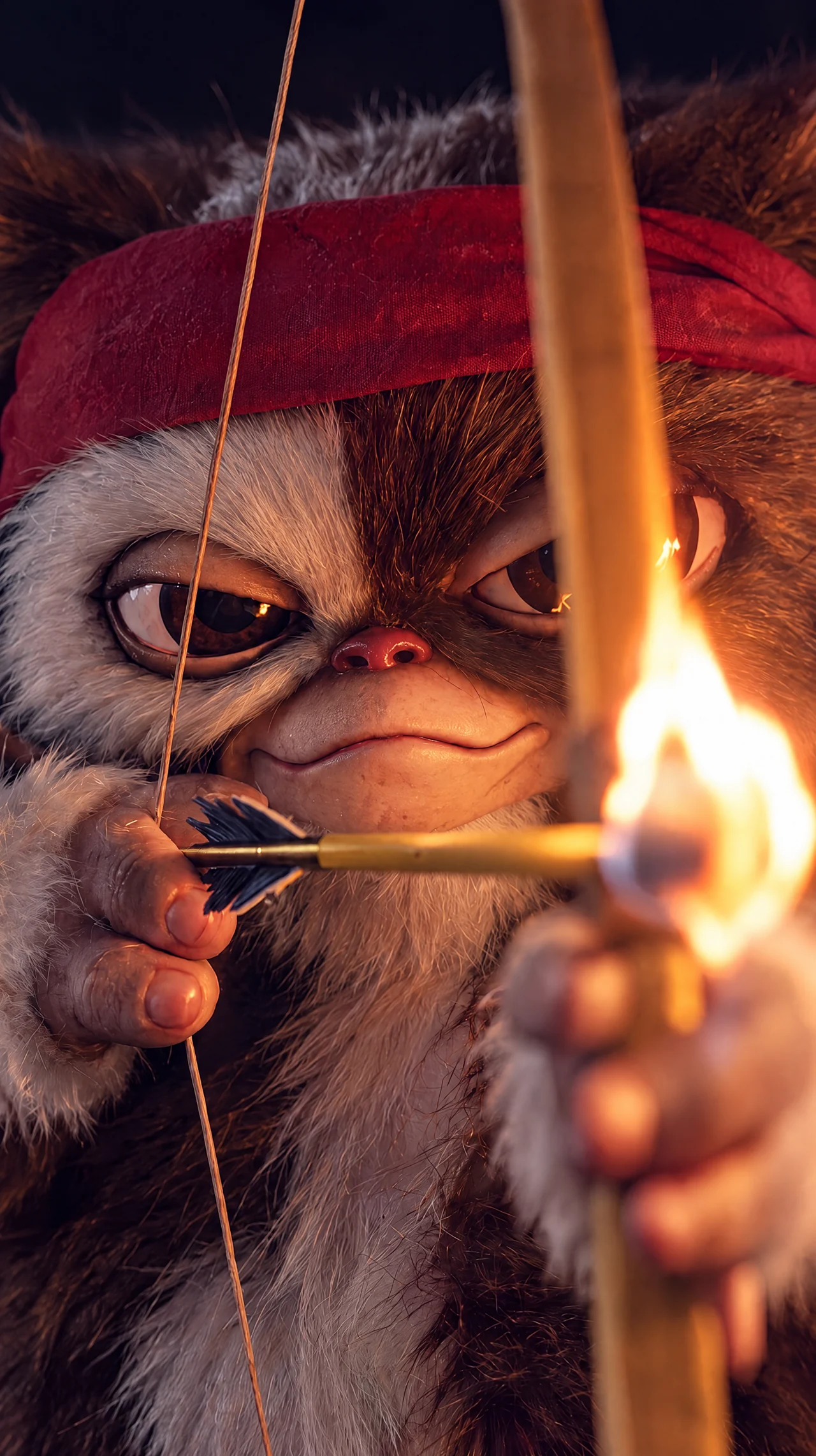
What if the Gremlins came to our hometown?
That was a question my brother Luca and I used to ask each other as children. We knew the streets, the squares and the rhythm of life in Neviano, in Salento, in southeast Italy. Imagining those creatures loose in a place so familiar made the fantasy feel close enough to touch. Gremlins, Billy After Midnight brings that childhood conversation into an AI short.
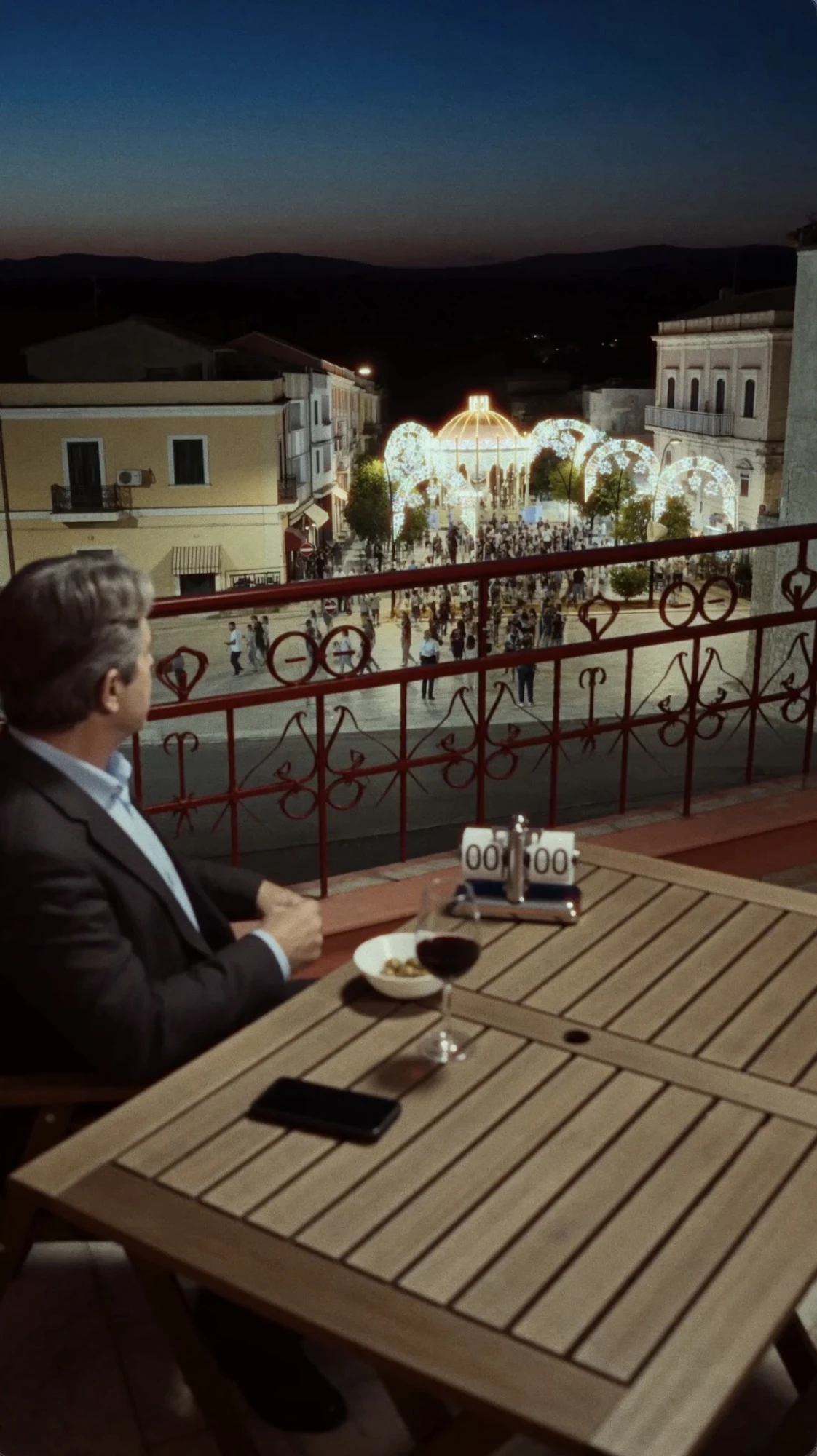
The idea was never simply to transplant a monster into an Italian backdrop. It was to let something from the films we loved interrupt the ordinary life of our own town. A summer evening, the festa lights, people gathered in the square: the last place anyone would expect the Gremlins to appear.
01
An actor waiting for the call
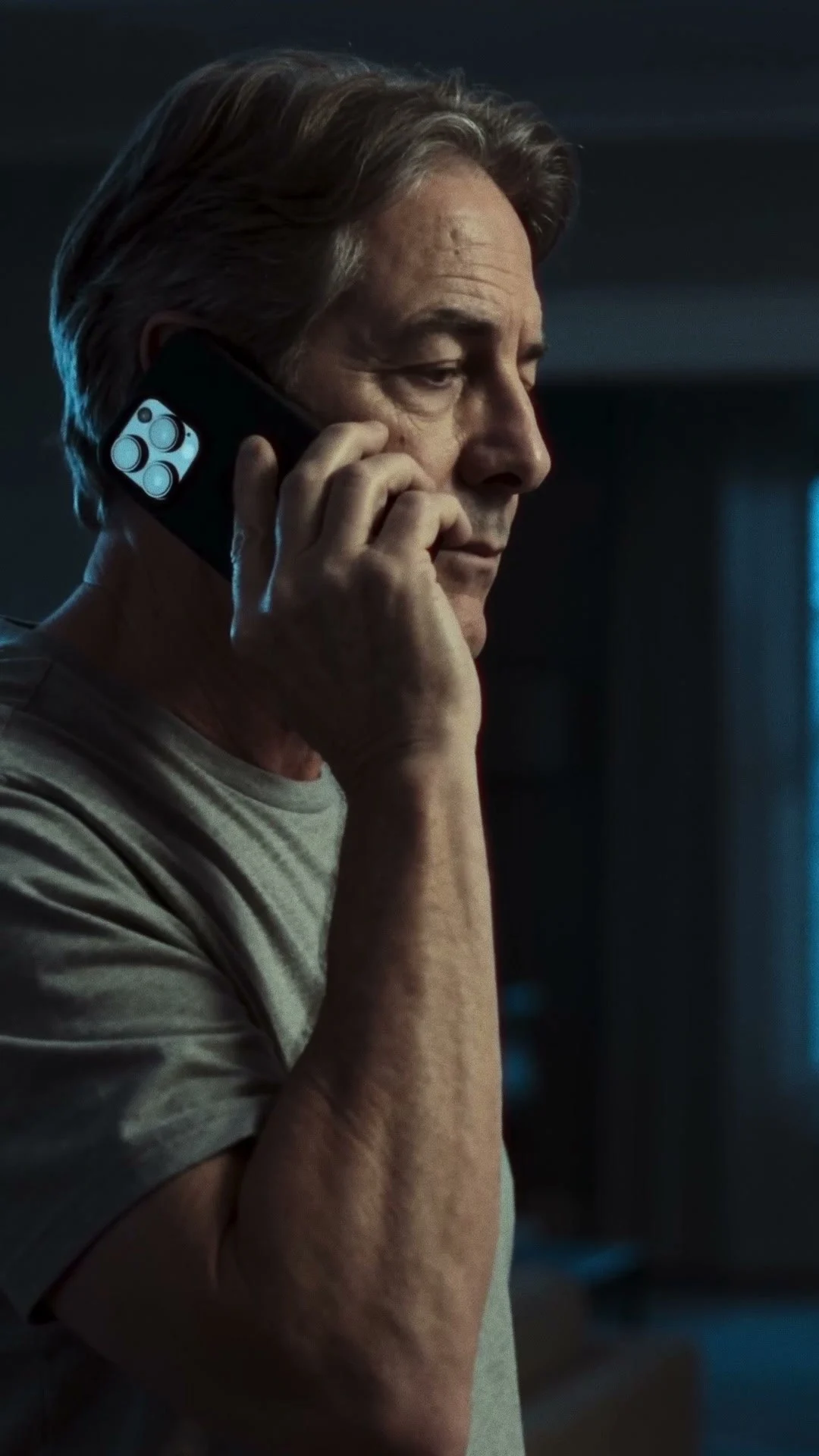
News that Gremlins 3 had been announced brought the old idea back. At the time of that announcement, the cast had not been disclosed. We imagined a story inside that uncertainty: what if the original lead were still waiting for the phone to ring?
In our fictional version, Zach Galligan goes to Italy to relax and put the question out of his mind. The trip is supposed to create some distance from the creatures and from the character of Billy. Instead, the film quietly starts putting him through their rules.
He gets his feet wet. He eats after midnight. He sits out in the sun. These are ordinary holiday gestures, but for anyone who knows Gremlins they become small warnings. The rules belong to the creatures in the original films; here they are visual echoes built around the human lead, little jokes that gradually make the holiday feel less safe.
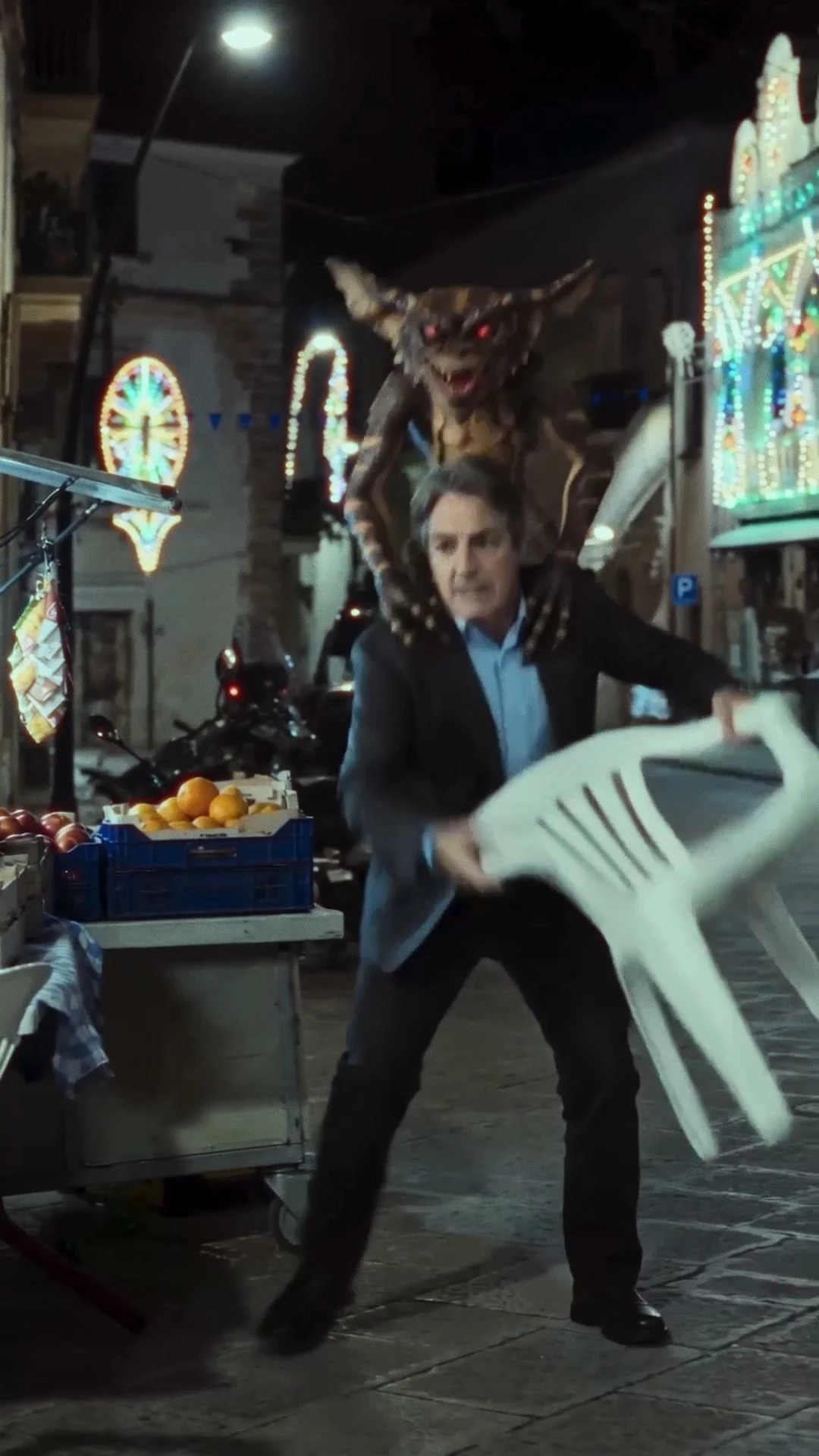
Then the fantasy breaks into the town itself. The Gremlins really come to life within the world of our story, in Neviano, where they are least expected. The man trying to forget Billy finds himself drawn back towards him.
Watch Gremlins, Billy After Midnight
An unofficial AI horror-comedy short. The film is embedded here in its original vertical format.

02
When the film world steps into reality
The closest comparison to the idea is Wes Craven’s New Nightmare, the seventh Nightmare on Elm Street film. It plays with the boundary between the people making a horror film and the horror entering their lives. What was supposed to remain on screen starts to feel real.
Gremlins, Billy After Midnight uses that kind of overlap in a playful, personal way. The protagonist is an actor associated with a character, trying to take a break from that world. But the world will not leave him alone. The question shifts from whether he will be called back to play Billy to whether Billy’s instincts are already coming back.
It is a fictional story and an AI portrayal, not a claim about Zach Galligan’s life, casting discussions or involvement in this project.
03
Give every reference a clear job
The production needed a consistent lead, recognisable creatures and a town that felt like a real place. Those are separate problems. I used character sheets to anchor identity and wardrobe, location references to establish the setting and light, and dedicated images for recurring creatures and props.
A reference sheet is useful because it carries a decision forward. The face, the suit, the scale of a creature or the position of a prop should not have to be reinvented for every shot. That continuity lets the audience follow the story rather than notice the image changing underneath it.

04
The spirit of practical creature work
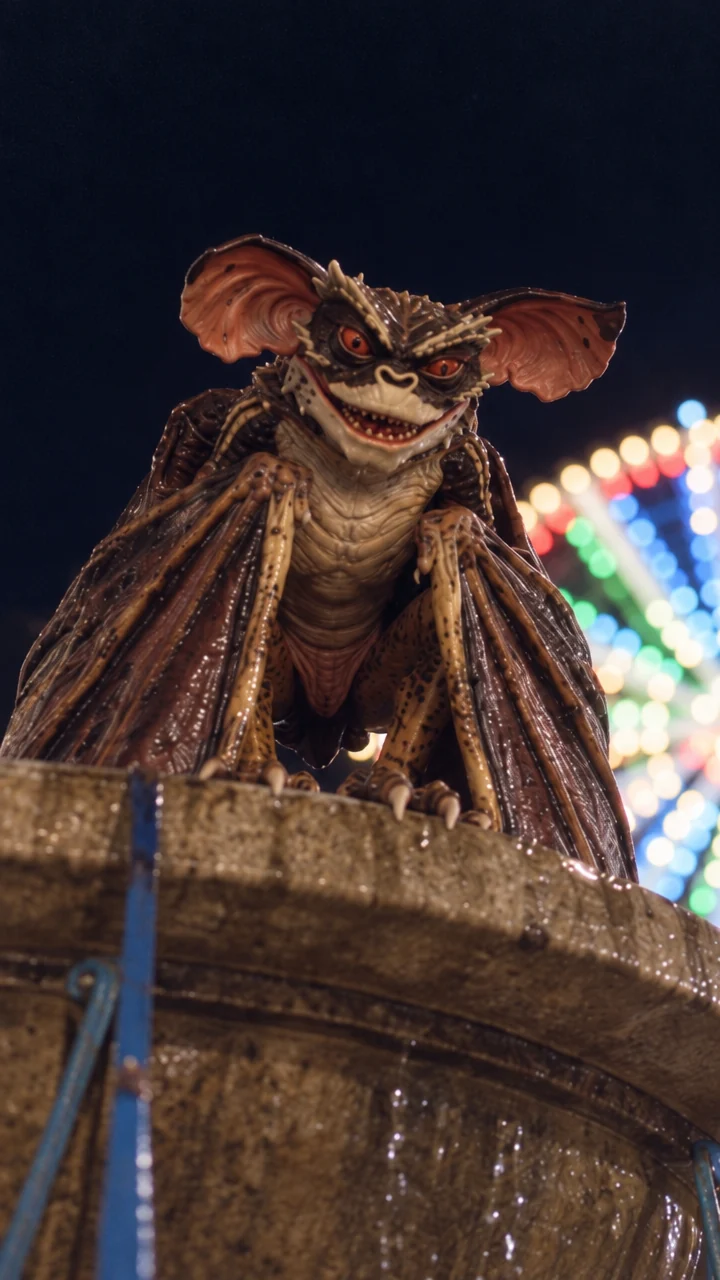
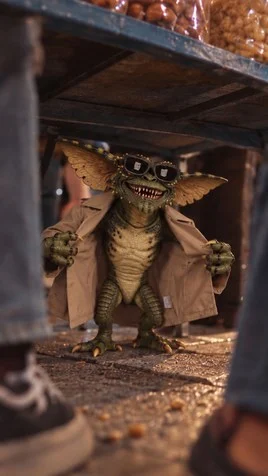
I wanted the creatures to feel tangible: expressive faces, sculpted surfaces, fur, fabric, teeth and the slightly awkward physical presence that makes a puppet memorable. The aim was to bring that spirit into the AI images, rather than make everything look smooth or weightless.
Scale and light matter as much as detail. A creature under a chair or beside a wall needs to belong to that setting. The contrast between the familiar village and the strange visitor is where much of the humour and unease comes from.
05
The storyboard was a way to direct movement
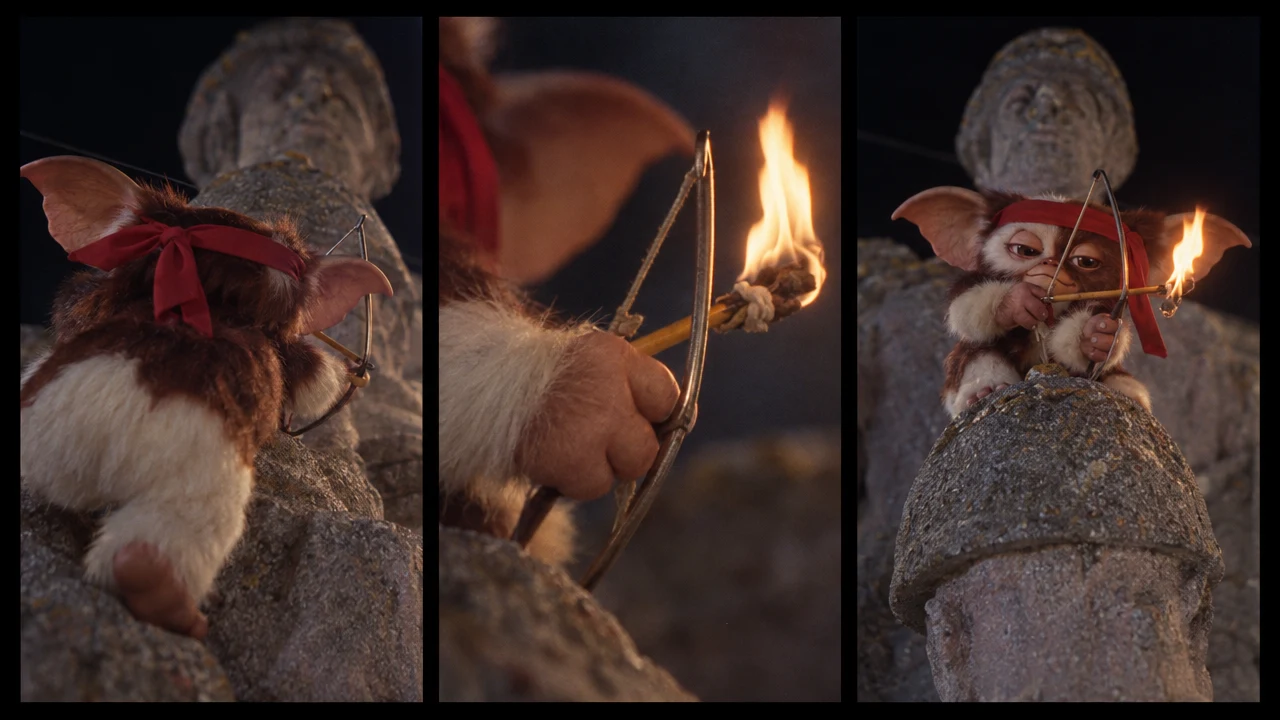
The Mogwai storyboard was not just a collection of attractive images. I used it to direct a particular scene when I needed a specific movement. Breaking the action into frames made the intention visible: how the creature approaches, positions itself, draws the bow and releases.
Each image became a directional beat. It gave the sequence a beginning, a physical progression and a destination. That is different from asking for a general action and accepting whatever motion appears: the selected frames set out what I wanted the scene to do.
I used MiniMax 3 for this part of the process because Seedance was blocking the Gremlin generations I was trying to make. That was a practical constraint of this project, so I moved the sequence to a tool that let me continue working on the intended action. It is a project-specific experience, not a universal ranking of models.
The storyboard, references and written direction worked together. The goal was to keep control of the shot’s intention, then judge the resulting movement as a filmmaker: does the action read, does the character stay consistent, and does the moment work in the edit?
06
A childhood thought, made visible
The process joined story development, reference gathering, shot design, AI image and video work, editing, titles, colour and sound. When a run lost texture or continuity, the useful response was to return to a strong frame and rebuild from the established references.
The most important test was whether the short still carried the original idea: two brothers imagining Gremlins in their hometown. The tools made that thought visible, but the reason for making it remained the same—seeing a place we know through the strange, mischievous world that fascinated us as children.